


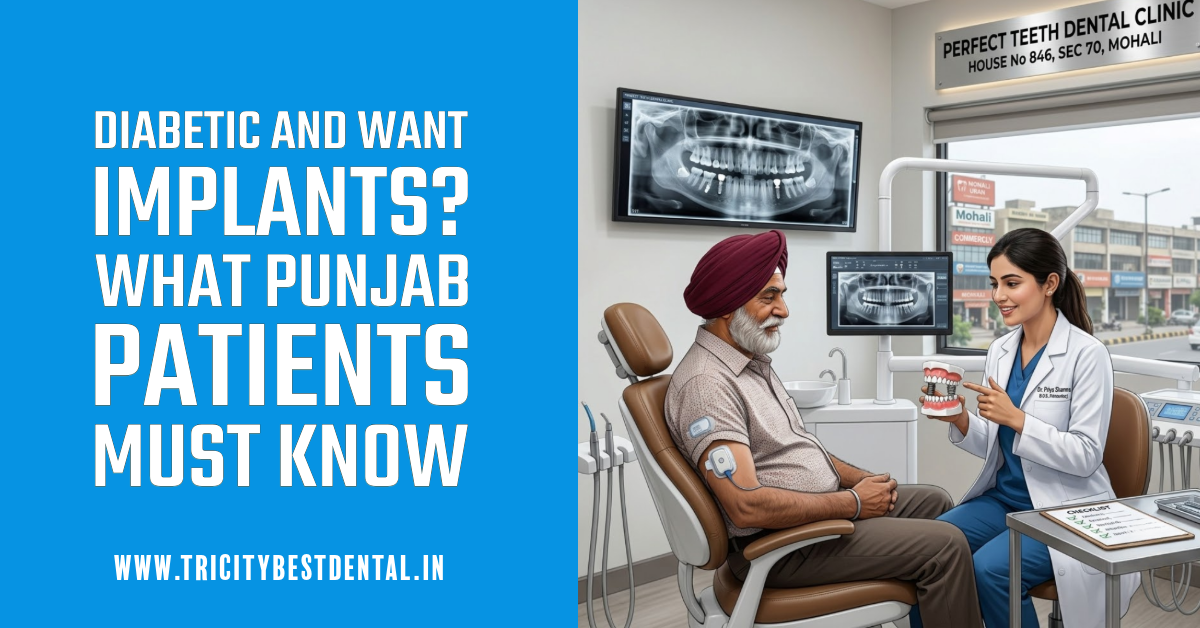
Diabetic and Want Implants? What Punjab Patients Must Know
Medically Reviewed by Dr. Amit Garg, MDS (Oral & Maxillofacial Surgery)
A patient from Zirakpur came in last year, implant consultation already half-cancelled in his head. He’d been told by a cousin that “diabetics can’t get implants.” He’d been living with Type 2 diabetes for nine years, managing it well, and almost didn’t bother asking a dentist directly. Turns out, that advice was flat wrong for his case.
Diabetics can get dental implants in Mohali, and most do so successfully, but the outcome depends heavily on how well-controlled the diabetes is. Well-managed blood sugar (generally HbA1c under 7-8%, as your physician defines control for you) is linked to implant success rates close to those of non-diabetic patients, while poorly controlled diabetes raises the risk of infection and slower healing.
Table of Contents
- Can Diabetics Get Dental Implants at All?
- Why Does Blood Sugar Control Matter So Much?
- What Tests Should You Get Before Treatment?
- Does Healing Take Longer for Diabetics?
- What Can You Do to Improve Your Odds?
- What Are the Real Risks to Know About?
- Myths vs Facts
- FAQs
Can Diabetics Get Dental Implants at All?
Yes, in the large majority of cases, diabetes alone isn’t a reason to rule out implants. What actually matters is how stable your blood sugar is, not the diagnosis itself.
Type 1 vs Type 2: Does It Make a Difference?
Both types can be candidates for implants when blood sugar is well-managed. The distinction that matters clinically is control, not which type you have, though Type 1 patients sometimes need closer coordination with their physician around timing.
Why Does Blood Sugar Control Matter So Much?
Poorly controlled blood sugar slows wound healing and weakens the body’s ability to fight infection, both of which directly affect whether an implant integrates properly with the jawbone. This is the single biggest factor separating a smooth implant case from a complicated one.
Did You Know? Elevated blood sugar impairs collagen formation, which is part of what makes gum and bone tissue heal around an implant in the first place.
What Tests Should You Get Before Treatment?
Most clinics, including ours, will ask for a recent HbA1c reading before finalizing an implant treatment plan. This single blood test gives a 2-3-month average of blood sugar control, which is far more useful than a single day’s reading.
- Share your most recent HbA1c report with your dentist
- Mention any recent changes in medication or insulin dosage
- Bring your physician’s contact if coordination is needed
Does Healing Take Longer for Diabetics?
Often yes, especially if blood sugar runs high around the time of surgery. Healing and osseointegration (the implant fusing with bone) can take somewhat longer, which is why dentists sometimes build in extra healing time before attaching the final crown.
Why Rushing This Step Is a Bad Idea
Loading an implant with a crown too early, before it’s fully integrated, is riskier for diabetic patients specifically. We’d rather wait an extra few weeks than deal with a failed implant later.
What Can You Do to Improve Your Odds?
Getting blood sugar as stable as possible before surgery makes the single biggest difference. Beyond that:
- Keep up routine dental cleanings even before the implant process starts
- Avoid smoking, which compounds healing risk on top of diabetes
- Follow post-surgical care instructions exactly, especially around hygiene
Pro Tip: If your blood sugar has been running high recently, it’s worth delaying the implant by a few weeks rather than proceeding and risking complications.
What Are the Real Risks to Know About?
Infection risk and slower healing are the two biggest factors, both tied directly to glucose control. Dr. Nisha Garg puts it this way: “We’re not treating the implant in isolation, we’re treating the whole patient, which is why we ask about blood sugar control before we even talk about implant brands.”
Myths vs Facts
Myth: “Diabetics can never get dental implants.”
Fact: Most diabetics with reasonably controlled blood sugar get implants successfully.
Myth: “Diabetes only affects teeth, not implants.”
Fact: Same healing mechanisms affected by diabetes apply directly to implant integration.
Myth: “One good blood sugar reading and you’re all set.”
Fact: Dentists do not look at a single day’s number, they look at a longer term average, the HbA1c.
Frequently Asked Questions
Q1: Are dental implants available for Type 2 diabetics in Mohali?
Yes, most Type 2 diabetics with reasonably controlled blood sugar are good candidates for implants.
Q2: What is a safe level of HbA1c for implant surgery?
It’s a decision your physician and dentist will make together based on your whole health picture and it usually works out better if it is well controlled all the time, so tell your dentist your recent reading at consultation instead of assuming a cut off.
Q3: Does diabetes affect the life of an implant?
Good control of diabetes does not shorten the lifespan of the implant significantly but poor control of diabetes increases the risk of complications such as peri-implantitis over time.
Q4: Should I tell my dentist about my diabetes medicine?
Yes, always. It affects planning for the healing time and sometimes also the timing of the procedure itself.
Conclusion
Diabetes isn’t an automatic disqualifier for dental implants in Mohali, it’s simply a factor that needs proper coordination between you, your physician, and your dentist. With 40+ years of combined experience and 1,200+ 5-star Google reviews, we take the extra step of reviewing your blood sugar history before planning treatment, not after.
Book Your Free Consultation at Perfect Teeth Dental Clinic, House No 846, Sector 70, Mohali. Call or WhatsApp 9876160546, and join 20000+ happy patients with dental implants.


