


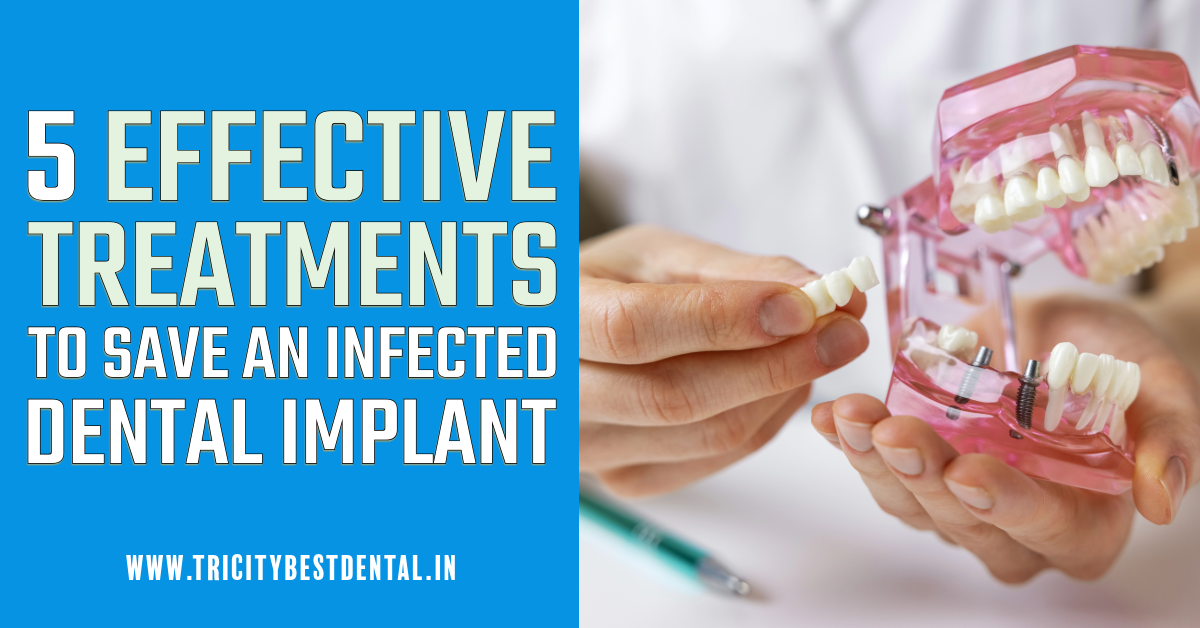
An infected dental implant can put your oral health and the success of your implant procedure at risk. This condition is also known as peri-implant infection or peri-implantitis. It happens when harmful bacteria inflame the tissues around the implant. It could cause bone loss and implant failure if not treated right away.
The good news? If you get help early and get the right treatment, you can often save the implant and get your gums healthy again. Let’s look at the best ways to solve this.
What does it mean when a dental implant is infected?
When bacteria build up around the implant site, it can make the bone and gums that hold the implant in place swell. This is called an infected dental implant. People who have had tooth implants in Chandigarh but didn’t take care of themselves afterward often get this. Infections in implants are not the same as infections in real teeth because they don’t always hurt at first and can get worse over time if they aren’t treated.
This means that a professional evaluation is very important.
Signs that a dental implant is infected
Recognizing early warning signs makes treatment more likely to work:
- Gums that are always swollen or red
- Bleeding around the area of the implant
- Bad breath that doesn’t get better
- Pus coming out of the area around the implant
- Looseness of the implant
- Pain while chewing
If you don’t pay attention to these symptoms, the damage to your bones could get worse.
The main reasons for dental implant infections
Knowing what caused something helps keep it from happening again:
- Bad oral hygiene after surgery
- Using tobacco and smoking
- Diabetes that isn’t under control
- Putting the implant in the wrong place
- Leftover cement from crowns
- Not enough bone density
- Care that comes later
Five effective ways to save a dental implant that is infected
1. Cleaning and Decontaminating Implants by Professionals
Specialized cleaning of implants can often help control mild infections. Dentists use ultrasonic tools, antimicrobial rinses, and laser therapy to get rid of bacteria without hurting the surfaces of implants.
Best for: Infection in its early stages with no bone loss.
2. Antibiotic Treatment (Local or Oral)
Targeted antibiotics help lower the number of bacteria. Dentists may put antibiotic gels directly into gum pockets or give patients oral medications, depending on how bad the infection is.
Important: Antibiotics alone can’t cure advanced infections; they help other treatments work.
3. Deep Gum Treatment (Scaling Around Implants)
This procedure gets rid of plaque and bacteria that have hardened below the gum line. It promotes tissue healing and prevents bacteria from penetrating deeper.
The implant is healthier and there is less oedema as a result.
4. Cleaning up after surgery and making new bone
People who have advanced infections that cause bone loss need surgery. The dentist lifts the gum tissue, removes the infected tissue, cleans the implant surface, and may use bone grafts or membranes that help the body heal.
Goal: Get the bone support back and stop the implant from breaking.
5. Taking out and replacing the implant (last resort)
If the infection has done a lot of damage to the bone and tissues around the implant, it needs to be taken out. A new implant may be put in later, after the bone has healed and grown back.
This option is not common, but it does protect overall oral health.
How long will it take for me to feel better after treatment?
The length of time it takes to heal depends on the type of therapy.
- Care that doesn’t involve surgery for one to three weeks
- Six to twelve weeks after the operation
- It takes three to six months to heal after getting a bone graft.
Dentists can keep an eye on healing with clinical exams and follow-up imaging.
Is it possible to treat an infected dental implant at home?
Home care can help you get better, but it can’t take the place of professional care.
Some good habits are:
- Brushing gently with a soft toothbrush
- Mouth rinses that kill bacteria
- Don’t smoke
- How to floss correctly
- Healthy eating
Don’t try home remedies like salt packing or herbal pastes; they can make the infection worse.
How to Keep Your Dental Implant from Getting Infected
It’s easier to stop something than to treat it:
- Keep your mouth clean every day
- Go to the dentist for regular checkups.
- Stay away from tobacco products
- Carefully follow the instructions after surgery
- Follow professional schedules for cleaning implants
- Take care of any health problems you already have.
When should you go to the dentist right away?
Get help right away if you have:
- A lot of swelling
- Movement of the implant
- Discharge of pus
- Bleeding that won’t stop
- Pain in the face or a fever
Early intervention helps implants last longer.
Why Experience in the Field Matters (EEAT Factor)
To be successful at managing implant infections, you need:
- Clinical proficiency
- More advanced diagnostic tools
- Correct surgical procedures
- Planning treatment based on evidence
Choosing an implant dentist with a lot of experience greatly improves results.
Common Questions (FAQs)
1. Is it possible to save an infected dental implant?
Yes, infections that are still in their early stages can often be treated successfully without having to take out the implant.
2. Does an infection in an implant hurt?
Not all the time. It’s important to get checked out regularly because some infections get worse without showing any signs.
3. How often do infections happen with dental implants?
Studies show that peri-implant infections affect only a small number of people who get implants. This is usually because they don’t keep their implants clean or because they have other risk factors.
4. Can antibiotics be used alone to treat an implant infection?
No, while they can aid in treatment, antibiotics are unable to cure shattered bones or remove hardened plaque.
5. Does smoking cause an infection in an implant?
Yes, Smoking makes you much more likely to get sick and slows down healing.
Final Thoughts
An infected dental implant doesn’t always mean that it will break. If you find an implant early, treat it right, and have a professional take care of it, you can save a lot of them. If you act quickly, you can protect both your money spent on dental care and your health.
Call us at 9876160546 to book your dental appointment with us. We have a team of top cosmetic dentists in Chandigarh| Mohali and the best dentists in Chandigarh | Mohali who will solve all your queries related to your smile and will provide the best possible solution.
Dr Nisha Garg( MDS)is the best cosmetic dentistry specialist in Chandigarh | Mohali with more than 20 years of experience in cosmetic dentistry and smile makeovers in Chandigarh. She has given thousands of veneers to hundreds of patients, helping them have stunning confident smiles.If you are looking for the best smile makeover dentist and teeth whitening in ChandigarhIndia, you can call us at 9876160546.
Implants are the most innovative discovery in dentistry, allowing people to have permanent and functional replacements for their missing teeth.
Being one of the most advanced healthcare cities in the country, dental implants have been widely used and favored by patients in Chandigarh not only to restore an attractive smile but also to improve their mouth’s health and function.
Further, the article shall serve as an ultimate guide to dental implants in Chandigarh, including procedure details, advantages of dental implants, cost evaluation, and a few of the best dental clinics in the city.
1. What Are Dental Implants?
Dental implants are substitutes for tooth roots and are mainly used as a biocompatible part, for instance, titanium. These implants are surgically positioned into the jawbone and allowed to bond with it. They serve as a reliable foundation onto which crowns, bridges, or dentures can be fixed. The end result is long-term and looks absolutely natural when good upkeep is carried out.
2. Benefits of Dental Implants
a. Natural Appearance: Dental implants are designed to look, feel, and function just like real teeth. They are matched in color, shape, and size with your other teeth. In this way, it provides an aesthetically comfortable and pleasing result.
b. Improved Oral Health: Unlike older types of bridges, these require the grinding down of adjacent teeth. Neighboring teeth aren’t affected by dental implants; hence, this preserves the integrity of your natural tooth structure, maintaining your overall oral health.
c. Durability: Dental implants are long-lasting and strong. With good oral hygiene and regular dental check-ups, they can last a lifetime.
d. Comfort and Convenience: Dental implants get rid of the discomfort with removable dentures since they are fixed permanently and don’t require adhesives or special cleaning routines.
e. Enhanced Speech and Chewing: Gaps between the teeth can impede your speech or proper mastication. With dental implants, these basic functions are restored to normal, and you can speak as clearly as before or enjoy any food without any restriction.
3. The Dental Implant Procedure
The dental implant procedure typically involves several stages, each requiring precision and care. Here’s an overview of the process:
a. Initial Consultation: Generally, it begins with a consultation with a dental implant specialist. At this point, your dentist determines your oral health, takes X-rays or 3-D scans of your jaw, and he or she diagnoses if you are an appropriate candidate for dental implants.
b. Treatment Planning: Following the initial assessment and evaluation, the dentist shall propose an individual treatment plan regarding the number of essential implants, implant-supported restoration (crown, bridge, or denture), and the sequence of the procedure.
c. Implant Placement: The next step is to surgically place the dental implant. The dentist will open the gum tissue and place the implant within your jawbone. The area is then stitched closed, and healing begins.
d. Osseointegration: After the implant is placed, it becomes incorporated into the jawbone in a process known as osseointegration. Although this might take a number of months, it is imperative for the long-term stability of the implant.
e. Abutment Placement: Upon completion of osseointegration, a small connector that supports the new artificial tooth, referred to as an abutment, is attached to the implant.
f. Crown Placement: Lastly, a crown fabricated from dental material is positioned over the abutment. This crown is fabricated to appear like one of your teeth; thus, the implant process is completed.
4. Cost of Dental Implants in Chandigarh
Dental implants vary in price depending on the number, type of restoration required, and the complexity of the case. In Chandigarh, a single dental implant would cost around INR 25,000 to INR 50,000, depending upon one’s requirement. Any added procedure, like bone grafting or sinus lifts, increases the overall price.
It is important that you find a dental clinic with implant specialists for this particular surgery for the best results. Although this might be a little expensive, over time, dental implants are an investment in the future of your oral health.
5. Choosing the Right Dental Implant Clinic in Chandigarh
Chandigarh is home to several top-rated dental clinics that specialize in dental implants. When choosing a clinic, consider the following factors:
a. Experience and Qualifications: Look for a clinic with experienced implant specialists who have a proven track record of successful implant procedures. Check the qualifications and certifications of the dentists.
b. Technology and Facilities: Advanced technology and state-of-the-art facilities are crucial for the success of dental implant procedures. Ensure that the clinic uses modern equipment, such as 3D imaging and digital planning tools.
c. Patient Reviews and Testimonials: Reading patient reviews and testimonials can provide valuable insights into the quality of care and patient satisfaction at a particular clinic.
d. Personalized Care: Choose a clinic that offers personalized care and takes the time to understand your needs and concerns. A patient-centered approach is essential for a successful and comfortable implant experience.
e. Post-Procedure Support: Aftercare is a vital aspect of the dental implant process. Ensure that the clinic provides comprehensive post-procedure support, including follow-up visits and guidance on maintaining your implants.
6. Aftercare and Maintenance of Dental Implants
Proper aftercare and maintenance are essential to ensure the longevity of your dental implants. Here are some tips for taking care of your implants:
a. Oral Hygiene: Maintain excellent oral hygiene by brushing your teeth twice a day, flossing daily, and using an antimicrobial mouthwash. This helps prevent plaque buildup around the implant and reduces the risk of infection.
b. Regular Dental Check-Ups: Visit your dentist regularly for check-ups and professional cleanings. Your dentist will monitor the condition of your implants and address any issues that may arise.
c. Avoid Harmful Habits: Avoid habits that can damage your implants, such as smoking, chewing on hard objects, or grinding your teeth. These habits can compromise the stability and longevity of your implants.
d. Healthy Diet: Maintain a balanced diet rich in vitamins and minerals to support your overall oral health. Avoid sugary and acidic foods that can contribute to plaque buildup.
7. Frequently Asked Questions About Dental Implants
a. Are dental implants painful? The implant procedure is performed under local anesthesia, so you should not feel any pain during the surgery. Some discomfort and swelling may occur after the procedure, but this can be managed with over-the-counter pain relievers.
b. How long does the dental implant process take? The entire process, from implant placement to crown placement, can take several months. This includes the time required for osseointegration and healing.
c. Are dental implants suitable for everyone? Most people with good oral and general health are suitable candidates for dental implants. However, individuals with certain medical conditions, such as uncontrolled diabetes or severe gum disease, may require additional evaluation.
d. What are the risks associated with dental implants? While dental implants have a high success rate, there are potential risks, such as infection, implant failure, and nerve damage. These risks are minimized by choosing an experienced implant specialist.
Conclusion
Dental implants are a life-changing solution for individuals with missing teeth, offering a natural-looking and durable replacement that can significantly improve your quality of life. In Chandigarh, the availability of advanced dental technology and experienced specialists makes it an ideal destination for dental implant procedures. By understanding the process, costs, and aftercare involved, you can make an informed decision and achieve a beautiful, healthy smile that lasts a lifetime.
Consult with the Best Dentists | Oral Surgeon in India
Call us at 9876160546 to book your dental appointment with us. We have a team of top dental implant specialists and cosmetic dentists in Chandigarh| Mohali and the best smile design dentists in Chandigarh | Mohali who will solve all your queries related to your teeth and will provide the best possible solution.
Dr Amit Garg( MDS)is the best dental implant specialist in Chandigarh | Mohali with more than 20 years of experience in surgical procedures in Chandigarh/Mohali. He has given thousands of dental implants to hundreds of patients, helping them have perfect chewing and stunning smiles.
Dr Nisha Garg( MDS)is the best veneer specialist in Chandigarh | Mohali with more than 20 years of experience in cosmetic dentistry and smile makeovers in Chandigarh. She has given thousands of veneers to hundreds of patients, helping them have stunning confident smiles.
If you are looking for the best dental implant dentist in Chandigarh India, call us at 9876160546 to book your appointment.
