


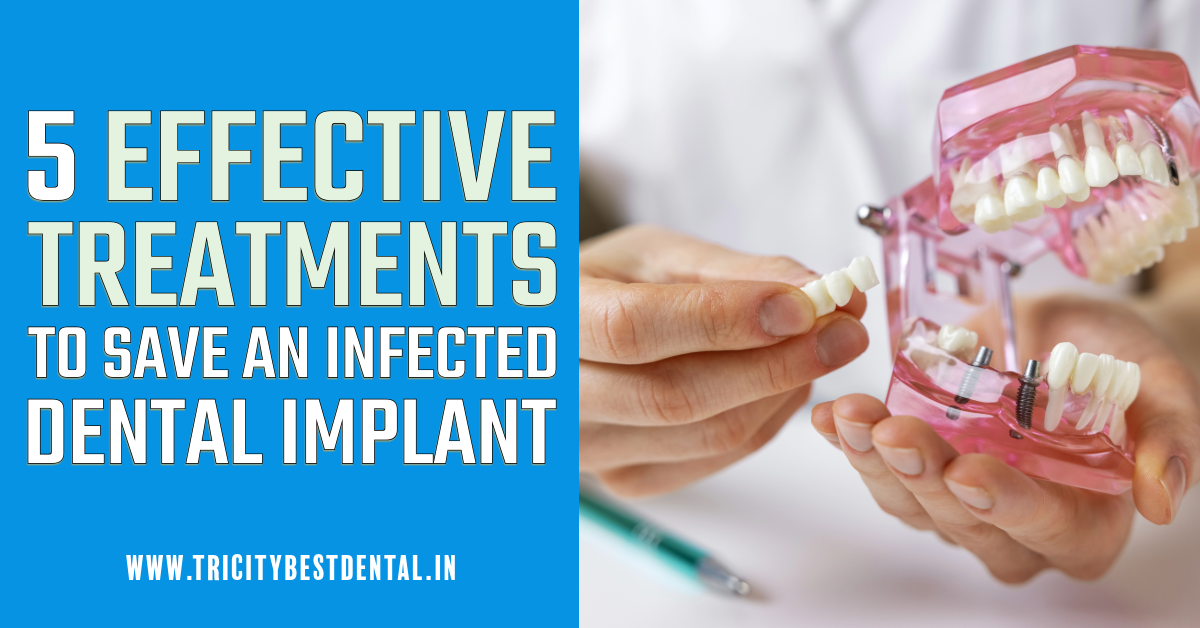
5 Effective Treatments to Save an Infected Dental Implant
An infected dental implant can put your oral health and the success of your implant procedure at risk. This condition is also known as peri-implant infection or peri-implantitis. It happens when harmful bacteria inflame the tissues around the implant. It could cause bone loss and implant failure if not treated right away.
The good news? If you get help early and get the right treatment, you can often save the implant and get your gums healthy again. Let’s look at the best ways to solve this.
What does it mean when a dental implant is infected?
When bacteria build up around the implant site, it can make the bone and gums that hold the implant in place swell. This is called an infected dental implant. People who have had tooth implants in Chandigarh but didn’t take care of themselves afterward often get this. Infections in implants are not the same as infections in real teeth because they don’t always hurt at first and can get worse over time if they aren’t treated.
This means that a professional evaluation is very important.
Signs that a dental implant is infected
Recognizing early warning signs makes treatment more likely to work:
- Gums that are always swollen or red
- Bleeding around the area of the implant
- Bad breath that doesn’t get better
- Pus coming out of the area around the implant
- Looseness of the implant
- Pain while chewing
If you don’t pay attention to these symptoms, the damage to your bones could get worse.
The main reasons for dental implant infections
Knowing what caused something helps keep it from happening again:
- Bad oral hygiene after surgery
- Using tobacco and smoking
- Diabetes that isn’t under control
- Putting the implant in the wrong place
- Leftover cement from crowns
- Not enough bone density
- Care that comes later
Five effective ways to save a dental implant that is infected
1. Cleaning and Decontaminating Implants by Professionals
Specialized cleaning of implants can often help control mild infections. Dentists use ultrasonic tools, antimicrobial rinses, and laser therapy to get rid of bacteria without hurting the surfaces of implants.
Best for: Infection in its early stages with no bone loss.
2. Antibiotic Treatment (Local or Oral)
Targeted antibiotics help lower the number of bacteria. Dentists may put antibiotic gels directly into gum pockets or give patients oral medications, depending on how bad the infection is.
Important: Antibiotics alone can’t cure advanced infections; they help other treatments work.
3. Deep Gum Treatment (Scaling Around Implants)
This procedure gets rid of plaque and bacteria that have hardened below the gum line. It promotes tissue healing and prevents bacteria from penetrating deeper.
The implant is healthier and there is less oedema as a result.
4. Cleaning up after surgery and making new bone
People who have advanced infections that cause bone loss need surgery. The dentist lifts the gum tissue, removes the infected tissue, cleans the implant surface, and may use bone grafts or membranes that help the body heal.
Goal: Get the bone support back and stop the implant from breaking.
5. Taking out and replacing the implant (last resort)
If the infection has done a lot of damage to the bone and tissues around the implant, it needs to be taken out. A new implant may be put in later, after the bone has healed and grown back.
This option is not common, but it does protect overall oral health.
How long will it take for me to feel better after treatment?
The length of time it takes to heal depends on the type of therapy.
- Care that doesn’t involve surgery for one to three weeks
- Six to twelve weeks after the operation
- It takes three to six months to heal after getting a bone graft.
Dentists can keep an eye on healing with clinical exams and follow-up imaging.
Is it possible to treat an infected dental implant at home?
Home care can help you get better, but it can’t take the place of professional care.
Some good habits are:
- Brushing gently with a soft toothbrush
- Mouth rinses that kill bacteria
- Don’t smoke
- How to floss correctly
- Healthy eating
Don’t try home remedies like salt packing or herbal pastes; they can make the infection worse.
How to Keep Your Dental Implant from Getting Infected
It’s easier to stop something than to treat it:
- Keep your mouth clean every day
- Go to the dentist for regular checkups.
- Stay away from tobacco products
- Carefully follow the instructions after surgery
- Follow professional schedules for cleaning implants
- Take care of any health problems you already have.
When should you go to the dentist right away?
Get help right away if you have:
- A lot of swelling
- Movement of the implant
- Discharge of pus
- Bleeding that won’t stop
- Pain in the face or a fever
Early intervention helps implants last longer.
Why Experience in the Field Matters (EEAT Factor)
To be successful at managing implant infections, you need:
- Clinical proficiency
- More advanced diagnostic tools
- Correct surgical procedures
- Planning treatment based on evidence
Choosing an implant dentist with a lot of experience greatly improves results.
Common Questions (FAQs)
1. Is it possible to save an infected dental implant?
Yes, infections that are still in their early stages can often be treated successfully without having to take out the implant.
2. Does an infection in an implant hurt?
Not all the time. It’s important to get checked out regularly because some infections get worse without showing any signs.
3. How often do infections happen with dental implants?
Studies show that peri-implant infections affect only a small number of people who get implants. This is usually because they don’t keep their implants clean or because they have other risk factors.
4. Can antibiotics be used alone to treat an implant infection?
No, while they can aid in treatment, antibiotics are unable to cure shattered bones or remove hardened plaque.
5. Does smoking cause an infection in an implant?
Yes, Smoking makes you much more likely to get sick and slows down healing.
Final Thoughts
An infected dental implant doesn’t always mean that it will break. If you find an implant early, treat it right, and have a professional take care of it, you can save a lot of them. If you act quickly, you can protect both your money spent on dental care and your health.
Call us at 9876160546 to book your dental appointment with us. We have a team of top cosmetic dentists in Chandigarh| Mohali and the best dentists in Chandigarh | Mohali who will solve all your queries related to your smile and will provide the best possible solution.
Dr Nisha Garg( MDS)is the best cosmetic dentistry specialist in Chandigarh | Mohali with more than 20 years of experience in cosmetic dentistry and smile makeovers in Chandigarh. She has given thousands of veneers to hundreds of patients, helping them have stunning confident smiles.If you are looking for the best smile makeover dentist and teeth whitening in ChandigarhIndia, you can call us at 9876160546.


